
news
NEW RESEARCH: How consumer advocates can shape the future of financial services
Consumers International and CGAP set out how consumer advocates can build a better future for consumers of financial services.
READ MORE

Using digital technology to access financial services (known as Fintech) is becoming an everyday occurrence for millions of us, and is set to be a growing trend in how we spend, send and save money. People can now pay bills, transfer money and access their bank statements easily using their computer or mobile phone. In higher income countries, this gives greater choice and convenience. In developing countries, the growth in digital financial services has given millions of consumers (who previously had little or no access to a bank account) access to financial services for the first time. But with technology developing so fast, it can be hard to keep up. We are concerned that consumer protection mechanisms within financial services are being outpaced by the development of mobile banking and associated technologies.
The rapidly evolving nature of digital financial services sometimes leave the marketplace with inefficient regulations and policies, unsatisfactory consumer redress , and digital ecosystems that cannot keep pace. These challenges expose consumers to traditional and new risks. Innovative regulatory approaches and digital financial services grounded in consumer protection and empowerment can create a fair digital finance marketplace.
Consumer associations are central to creating a fair digital finance marketplace. Research conducted by Consumers International and the Consultative Group to Assist the Poor (CGAP) highlights how critical consumers associations are in protecting consumers of financial services in Low- and Middle-Income Countries via a range of innovative strategies.
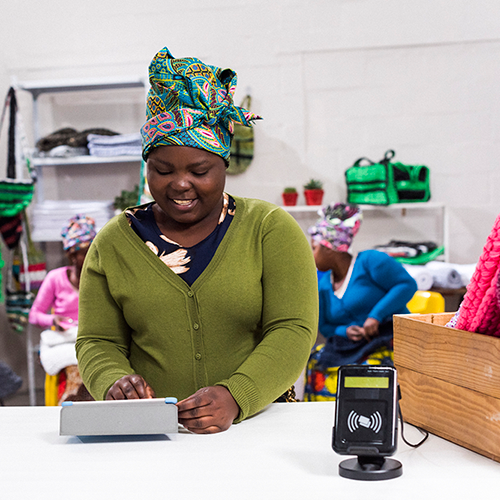
Consumers International and our membership of consumer associations in Low- and Middle- Income countries are delighted to launch the Fair Digital Finance Accelerator.
The Fair Digital Finance Accelerator will build a unique and vibrant community of consumer associations in Low- and Middle-Income countries and a platform for collaborative action, learning and collective influence on digital finance to shape the future for consumers.
The Accelerator will provide training, new insight, and build constructive bridges to regulators.
At launch, the Fair Digital Finance Accelerator community has 40 members representing consumer associations across the world in Latin America, Africa, Europe, the Middle East and Asia. 97% of consumer associations in our community actively focus on the promotion of women consumers’ rights and most organisations focus on the promotion of children, older people, and hard to reach communities’ rights.
When asked, the Fair Digital Finance Accelerator community shared that:
The Fair Digital Finance Accelerator is funded by the Bill & Melinda Gates Foundation with support from CGAP.
If you have any questions about the Fair Digital Finance Accelerator, please contact the team here.
Financial technology, or FinTech, is reshaping the financial services sector as we know it.
From driving greater competition within the industry to widening access to core financial services for consumers without a basic bank account, FinTech has the potential to deliver many positive outcomes for consumers.
There are however, a number of risks and consumer detriments are emerging from FinTech, including issues around privacy, cybercrime and gaps in regulation.
Our latest report; Banking on the future: an exploration of FinTech and the consumer interest, explores how and why FinTech is transforming financial services markets, and takes an in-depth look at the challenges and opportunities for consumers.
You can download a summary of the report in English, French, Spanish and Arabic. Click below to download the full report in English.
DOWNLOAD FULL REPORT
As more people make transactions using their phone, tablet or computer it is important that we can be sure these payments are secure and our consumer rights are fully protected. Consumers International is working with the OECD, the UN and the International Standards Organisation (ISO) to introduce and enhance consumer protection for e-commerce and fintech (the use of digital technology to deliver financial services).
A new international standard for mobile financial services
In some cases the regulation of financial services is struggling to keep up with new developments and in some areas, the level of protection that consumers receive is decided by the provider.
Consumers International worked closely with a range of stakeholders as part of an ISO working group to develop a new international standard for mobile financial services (ISO 12812 Core banking – mobile financial services) to ensure the standard included the consumer protections that would be expected for traditional services, but updated for the challenges created by new technology.
We fought for limits on how much consumers would be liable for unauthorised or fraudulent use of their payment systems. We secured more transparency in remittances sent between countries and we gained important safeguards on logging transactions and receipts, with electronic logs being kept available.
One specific issue that had clearly not been considered until our intervention was the treatment of dormant assets, in particular in the event of the death of an account holder, a major issue where consumers do not have an individualised mobile phone contract as in much of Africa.
The new standard, published in 2016, promotes best practice, trust in services and the building of consumer confidence in mobile financial services.
The standard will be reviewed periodically. As mobile financial services become ever more present, especially in developing countries, we must maintain the pressure for improved protections.
(eng) 
Consumers International and CGAP set out how consumer advocates can build a better future for consumers of financial services.
READ MORE
From online banking to Buy Now, Pay Later, digital financial services (DFS) have opened up a new world of opportunity for consumers. However, as the delivery of financial services for consumers is digitised, the urgency to close the digital gap becomes greater, as does the need to address mounting issues such as protecting consumer privacy and safeguarding data.
READ MORE
To assist governments in identifying and closing these gaps, this Agenda provides a set of core principles and a checklist of practical policy actions that together will better protect citizens and contribute to a stronger, more coordinated global response.
View all publications