


Site Toolkit

The Real Deal

The Real Deal: Exposing unethical behaviour

Last updated: 2 July 2009

The Real Deal is part of CI's ongoing work on sustainable consumption. Working with our member organisation's and partners, this series of features highlight unethical and unsustainable behaviour by corporations and governments.

Its aim is to help consumers everywhere make informed and responsible choices about the products they buy and the services they use.

Along with investigative reports from around the world, The Real Deal is also working with the independent Ethical Consumer Research Association (ECRA) to expose the hard facts behind some on the world's most popular brand and products.


The Real Deal on running shoe production - www.consumersinternational.org/TheRealDealRunning costs

300,000 workers of Yue Yuen, a subsidiary of the Chinese Taipei-based Pou Chen group, produce one in every six sport shoes sold globally or 190 million pairs a year.

A recent International Consumer Research and Testing (ICRT) involving 11 consumer organisations looked at the factories involved in both supplying  components for and assembling some of the most popular global running shoes.

They investigated the conditions endured by workers in these factories, as well as the environmental impact of both the shoes and their impact - find out which companies took part in the research and who refused... and download the fact sheet


The Real Deal on the hotel industry - Best Western InternationalCheck this out before you check in...

At over US$730 million, tourism is the world's biggest industry. Yet the nearest most international hotel chains appear to get to a sustainability strategy is an eco-friendly towel policy. 

Research by CI and ECRA also reveal that along with the serious lack of corporate social responsibility reporting (CSR), some international hotel chains are doing significant damage to fragile natural environments and perpetuating poor treatment of of local residents and hotel employees.

Check out the unethical behaviour of the worst offending international hotel chains and look at what the industry, as well as consumers, can do to change this.


Burning eswate

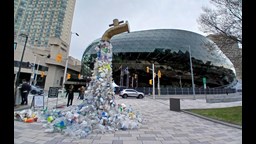
e-waste: West Africa continues to drown in the rich world's obsolete electronics

In partnership with DanWatch, this investigative feature looks at the half a million second-hand computers that enter Nigeria every month, 75 per cent of which are obsolete and quickly end up on toxic dumps around Lagos.

This is just the tip of the 6.6 millions tons of unaccounted-for e-waste that leaves EU countries each year which continues to build up in the developing world despite international bans.

Read the feature and watch the film


Mobile phones

The hidden cost of mobile phones

Mobile communication is big business. More than three billion of us own a mobile and sales of handsets alone amounted to US$136 billion worldwide in 2006.

Yet despite the remarkable irreversible impact the mobile phone has had on our lives, very little attention is given to the production process behind the handset. Unlike the clothes or food industries, we see precious few headlines about the ethics of mobile phone companies.

Get the real deal on the mobile phone industry, including the companies ethical ratings  


Coffee plantation, Brazil

Just Coffee

CI's Just Coffee documentaty takes a look at four of the biggest certification labels on the market: Utz Kapeh, Rainforest Alliance, Organic and Fair Trade. It examines what they offer the consumer and how they benefit the producer. The film talks to large-scale coffee plantations and small-scale cooperatives in Brazil about the differences certification has made to their community and their local environment. It also speaks to coffee roasters, trade officials, labelling organisations and retailers in Europe about what they are doing to develop the certified coffee market.

See the film and find out more about the project